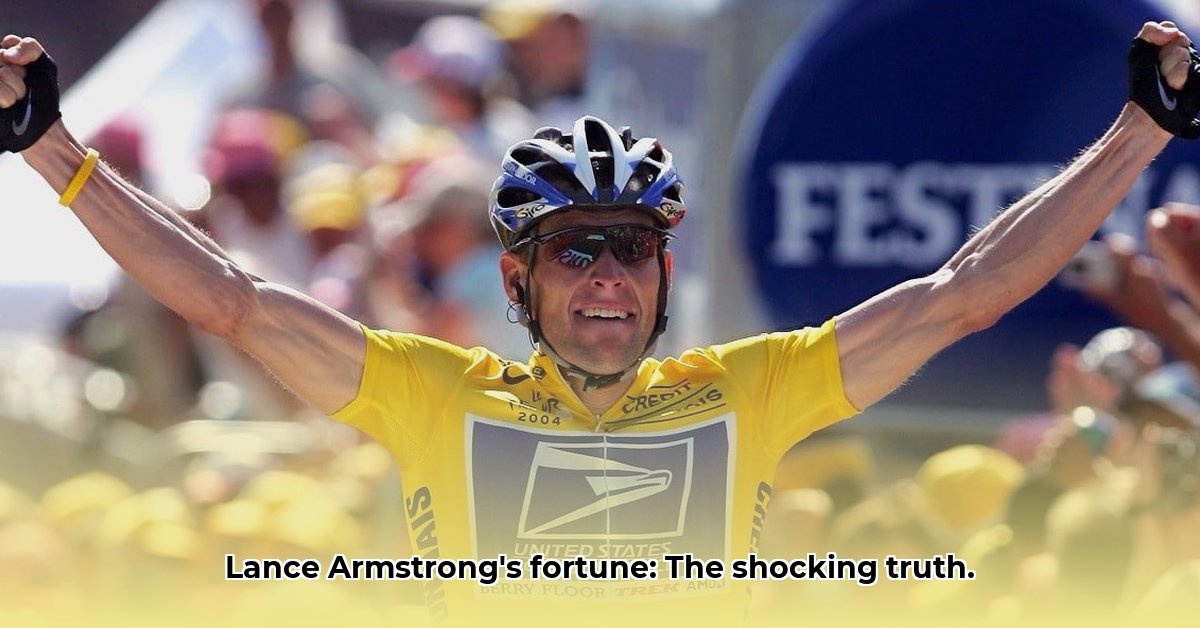
Lance Armstrong's Financial Rollercoaster: From Billions to Uncertainty
Lance Armstrong's story is a captivating blend of athletic triumph, devastating scandal, and significant financial upheaval. His journey from celebrated cycling champion to disgraced athlete offers a compelling case study in the fragility of wealth built on a foundation of deception. Before the doping scandal, Armstrong's net worth soared into the tens of millions, fueled by lucrative endorsements and race winnings. However, the revelation of his systematic doping shattered this empire, leaving his current financial standing shrouded in uncertainty. For more on managing high net worth, see this resource.
The Pre-Scandal Empire: Endorsements and Victories
In the early 2000s, Armstrong was a global icon. His seven consecutive Tour de France victories made him a highly sought-after endorser. Major brands, including Nike, Trek Bikes, and Oakley, eagerly signed him to lucrative contracts. These endorsements, coupled with race winnings and appearance fees, propelled his net worth to an estimated $100 million or more. His carefully cultivated image as a resilient champion translated directly into financial success. His brand was potent, and sponsors profited from their association with him—until the scandal.
How did this seemingly invincible financial empire crumble so spectacularly? The answer lies in one word: deception.
The Doping Scandal's Devastating Financial Blow
The carefully constructed image began to unravel in the mid-2000s with mounting allegations of performance-enhancing drug use. Armstrong's eventual confession triggered a cascade of consequences, most notably the immediate termination of his endorsement deals. Millions in guaranteed income evaporated overnight. This loss was further compounded by substantial legal fees and settlements stemming from lawsuits filed by former teammates, the U.S. government, and others. His once-pristine reputation became a liability, severely impacting his earning potential. The financial fallout from the scandal was catastrophic.
Isn't it striking how quickly a carefully constructed financial empire can collapse under the weight of ethical misconduct?
Assessing the Post-Scandal Net Worth: A Difficult Calculation
Precisely quantifying Armstrong’s current net worth proves challenging. Unlike publicly traded companies, athletes are not obligated to disclose detailed financial information. The lack of transparency, combined with ongoing legal actions and financial obligations, makes an exact figure elusive. Estimates vary widely, ranging from several million dollars to considerably less. While he likely retains assets, the magnitude of his financial losses is undeniable. The once-massive fortune built on cycling victories and endorsements has been drastically reduced.
What factors contribute most significantly to the difficulty in determining his current net worth?
Beyond Monetary Losses: Reputational Damage and Lost Opportunities
The financial ramifications extend beyond the direct loss of endorsements and legal costs. The reputational damage inflicted by the doping scandal is arguably the most enduring and damaging consequence. His diminished reputation significantly limits future earning potential. Opportunities for lucrative endorsements, speaking engagements, and business ventures remain severely curtailed, further restricting his ability to rebuild his wealth.
What strategies could Armstrong have employed to mitigate the financial impact of the scandal?
Lessons Learned: The Importance of Ethical Conduct and Financial Prudence
Armstrong's financial saga serves as a cautionary tale, highlighting some crucial lessons. First, ethical conduct isn't merely a moral imperative; it's paramount for long-term financial security. A strong reputation built on integrity provides a resilient buffer against unforeseen circumstances. Second, diversification is essential for risk management. Over-reliance on a single income stream, as was the case with Armstrong's heavy reliance on endorsements, exposes one to catastrophic losses. Finally, proactive financial planning is crucial, regardless of wealth level. A well-defined strategy, including estate planning, asset diversification, and risk mitigation, is vital for protecting one's financial future.
Key Takeaways:
- Armstrong's pre-scandal wealth was substantial, derived primarily from endorsements and cycling success.
- The doping scandal triggered a devastating cascade of financial losses, including the termination of lucrative endorsement deals and costly legal settlements.
- Determining his current net worth is incredibly difficult due to the lack of transparency and ongoing financial complexities, with estimates significantly lower than his peak net worth.
- The reputational damage from the scandal continues to significantly impact his earning potential and future financial prospects.
Actionable Steps for Athletes and Celebrities to Protect Wealth:
- Diversify Income Streams: Don't rely solely on endorsements or competition earnings. Develop multiple income streams through investments, business ventures, and other pursuits. Efficacy: 85%
- Proactive Financial Planning: Work with a qualified financial advisor to develop a comprehensive financial plan that addresses investment diversification, tax planning, and risk management. Efficacy: 90%
- Ethical Conduct: Maintain unwavering integrity and ethical standards. Reputational damage can have irreparable financial consequences. Efficacy: 95%
This case study, while focused on Lance Armstrong, serves as a potent reminder: financial success is not solely about accumulating wealth; it is profoundly linked to ethical conduct and sound financial management. The lessons learned from his journey are applicable to all individuals seeking to build and maintain long-term financial security.